
BUSINESS-SYSTEM ESTIMATES ・ FREE TOOL
Built specifically for
business-system estimates.
Ordering, inventory, core systems, and more. Just answer the questions and get a ballpark development cost in three plans: Pine, Bamboo, and Plum.
Built on the track record and know-how IPLoT has accumulated in custom development, we turned our proven business-system estimating “template” directly into an AI.
WHY IT WORKS
The estimating we honed in real custom development, exactly as is.
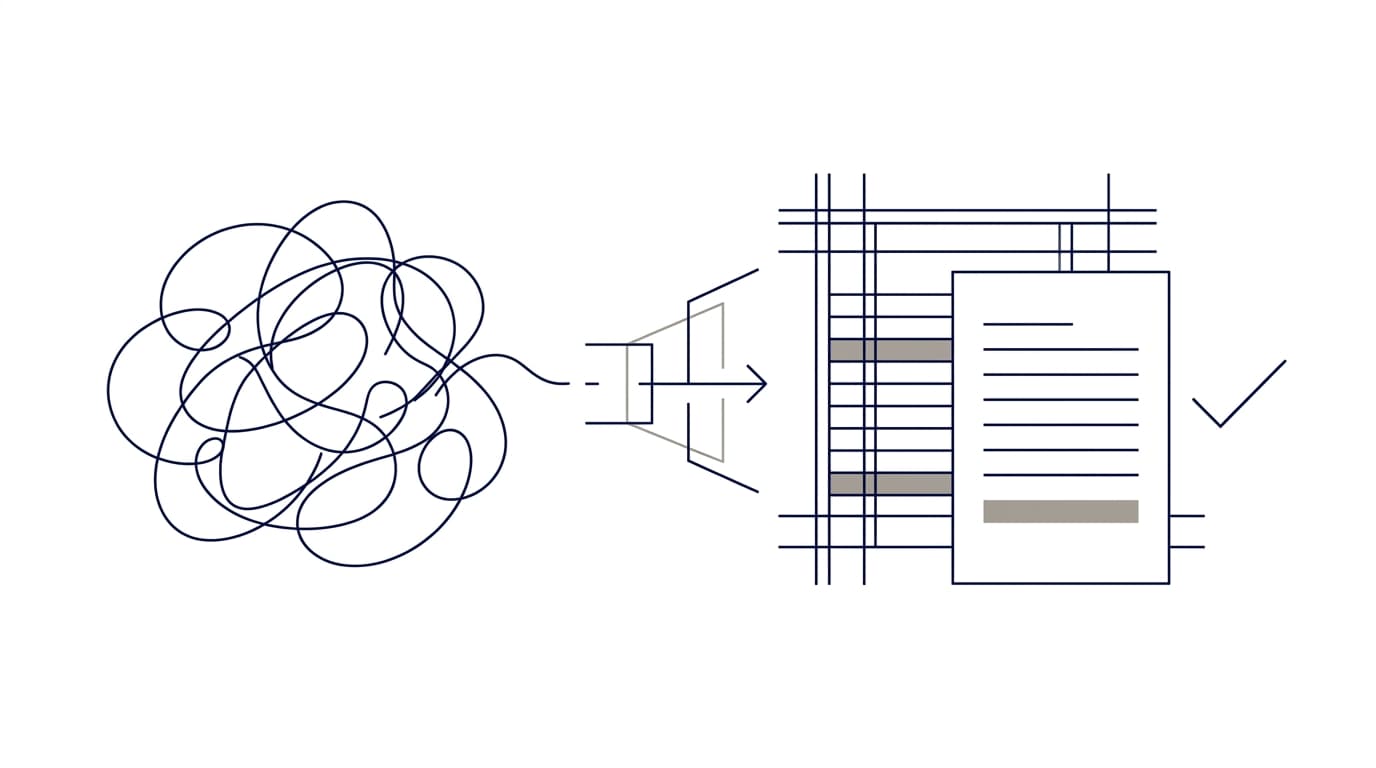
Business-system estimates tend to become a black box where it’s hard to tell what costs what. Across countless custom-development projects, we’ve refined a template: “break out the line items → structure into three plans → align with the customer.” Instant Estimate puts that practical knowledge directly into an AI, so even a beginner gets a ballpark figure along the same path as a veteran PM. The reasoning and formulas are all published in the Guidebook, so you can trace the rationale behind every amount.
HEARING
An estimate starts with discovery
Good estimates come from good discovery. Only when three things come together — “where things stand now (AS-IS),” “where you want to be (TO-BE),” and the difference between them (GAP = the issue to solve) — can you translate them into a price. Instant Estimate turns these three into questions even a beginner can answer to draw them out.
Where things stand now
The workflow, volumes, and effort. Don’t stop at “probably a lot” — capture it in numbers, like ◯ cases/month or ◯ hours/month.
Where you want to be
The ideal state you’re aiming for, such as taking orders on the web or viewing inventory.
The gap to bridge
The difference between AS-IS and TO-BE. This becomes the target of the estimate — the issue to solve.
* The discovery template (AS-IS / TO-BE / GAP) is also published in the Guidebook courses.

METHOD
How we think about estimates
Turning vague operational worries into a structured estimate. We run this in four steps.
Break out the line items
Decompose what you want to do into units of 200,000–1,000,000 yen. For each one, ask “what value does this amount buy?”
Structure into three plans
Sort into must-have, key options, and optional, then bundle into three plans: Plum, Bamboo, and Pine.
Align with the customer
The proposal is a starting point, not a final decision. Draw out priorities and be ready to justify every cut in one line.
Fold in the differences and reissue
Make the differences explicit and iterate as many times as needed. Assume almost no project closes in a single round.
FORMULA
Amounts come out of a “formula”
Pricing by an AI’s gut feel wobbles and can’t be justified. Instant Estimate calculates with fixed unit prices × quantity (scale), so you can explain “why this amount” in one line. The five items below are what make up the “scale” that determines the amount.
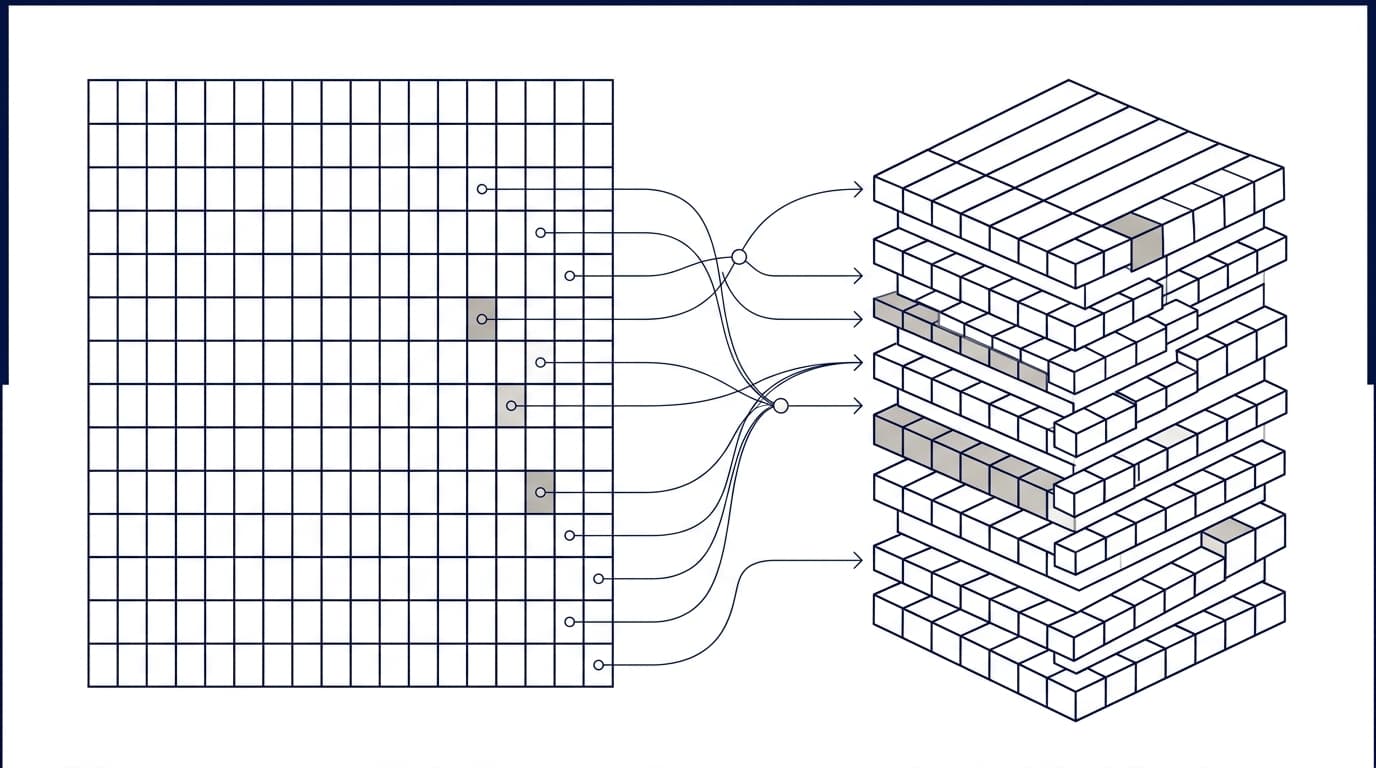
The amount of work a system requires is determined by the “number of combinations” of who (the role) handles which ledger (the data). You count them one cell at a time — for example “order clerk × order data,” “approver × order data,” “inventory clerk × inventory data,” and so on. Each cell needs the basic operations (create, read, update, delete) plus controls over what that person is allowed to see and verification tailored to that person. We build the foundation at ¥50,000 per cell, so more features means more cells, and the price grows in a straightforward way.
Wherever work passes from person to person or department to department — the “moment of hand-off” — exceptions inevitably arise: waiting for approval, sending back, approval by proxy, “who gets notified,” “how much the other party can see,” and so on. If you don’t build this out, real-world operations grind to a halt. We budget +¥300,000 for the full set of this handling at each hand-off point. The more hand-offs a workflow has, the more this adds up.
When connecting to accounting software or an existing system, “just reading (reference only)” is relatively cheap. Two-way writing, on the other hand, creates the same data in two places, so you have to build for “which one is correct,” “how to fix it when they diverge,” and “how to resend if a transmission fails” — which makes it more expensive. We stack this up for each system you connect to.
For AI reading of photos or documents, heavy aggregation, and other “processing that takes more than a few seconds to produce a result,” you can’t keep the user waiting in front of the screen. So you need a separate mechanism that processes things in order behind the scenes (queueing, progress display, retry on failure, notification when done). This is all but essential when embedding AI into a business system, so we budget ¥1,000,000–3,000,000 as a line item separate from development costs.
No matter how good a system is, its value is zero if the field doesn’t use it. You need briefings, manuals, migration of existing data, and follow-up support when people first start using it. This varies widely depending on the field’s IT comfort, drive, whether there’s a champion leading the charge, and how much time can be secured — so the range is ¥0–3,000,000. Instant Estimate asks about these four points to produce this figure.
* Unit prices can be adjusted to fit the project and your company’s policy (via the back-office admin screen).
How the calculation flows ── why it doesn’t wobble
- ① For each feature, start from types of users × types of data handled × 50,000 yen , then add the spots that cross departments or owners (approvals, send-backs, etc.) and external system integrations.
- ② Trim each line item to a unit of 200,000–1,000,000 yen (split line items that are too large so they’re visible).
- ③ Sort into must-have / key options / optional, and Plum = must-have only / Bamboo = must-have + key / Pine = everything , stacking them into three plans.
- ④ the AI / background infrastructure and the on-site rollout phase are added separately (on-site rollout is on-site conditions × number of locations, ranging from 0 to 3M yen).
Example) Web entry for ordering: 2 user types × 3 data types = 6 cells × 50K = 300K. One cross-department approval adds +300K. Two-way integration with accounting software adds +400K … and so it stacks up, so you can explain the total breakdown “why this amount” one line at a time.
3 PLANS
Presented as three plans: Pine, Bamboo, Plum
Present only one plan and the customer can’t choose. We sort into must-have, key options, and optional, then structure it into three plans.
Must-have features only
From approx. 4.8M yen
The minimum configuration that still delivers value as a business system.
Must-have + key options
From approx. 6.1M yen
A standard baseline that includes operational improvement.
All features
From approx. 8.8M yen
A full configuration including external integrations and automation.
* Amounts are a sample for a web-based ordering project. In practice they’re calculated automatically from what you enter.

PITFALLS
8 pitfalls to avoid
It automatically self-checks whether the estimate has fallen into any of the common mistakes.
VOICE
Customer Voices
Voices from the teams who have actually put this to work in the field.

Manufacturer A
President & CEO
We were constantly making transcription errors with phone and fax orders. Even without knowing the technical jargon, just answering the questions let me see “what we could build and for how much.” That was a huge help.

Retailer B
Store Operations Manager
We wanted to see inventory across multiple stores from headquarters in real time, but we didn’t even know how to get an estimate. Just answering layman’s questions gave us a rough figure, and it became the trigger to start the conversation.
FAQ
Frequently Asked Questions
It’s completely free, with no registration required. Before showing your estimate, we ask for your contact details (company name, your name, email, etc.), but we use them only to follow up about the estimate.
Yes. No jargon needed. Just describe what you want to do and what troubles you in everyday words, then answer the questions that appear (things you can answer, like monthly volume, systems to connect, and on-site conditions). The AI estimates the technical parts, such as the number of tables.
It specializes in estimates for in-house business system development such as ordering, inventory, sales management, and core systems.
It’s a “rough starting point” for before you consult us. We calculate it mechanically from fixed unit prices × quantities (types of users × types of data handled, number of integrations, on-site conditions, etc.) and show the rationale. In practice, we refine it by aligning on the details.
After reviewing the result, you can consult IPLoT directly or request a formal estimate right away. Based on what you entered, a member of our team may reach out to you.
Yes. The estimating template (line items → three plans → alignment) and the formulas and reasoning behind the amounts are published in the IT Consulting Guidebook.
The estimate is calculated on the spot; we do not save or accumulate project details. We handle only your contact information, and only to follow up with you.
Start with a working draft.
No registration, free. Just answer about 5 minutes of questions and get a rough figure for your business system.